-
Dorian
Philosophical Novel
Linden J. DeBie

Linden J. DeBie is a writer, philosopher, and historian. Coming out of the field of philosophy, Dr. DeBie has written on various related subjects and most recently has completed a whimsical historical novel. Although most of his work has centered on nineteenth-century American religious thought, he has branched out to address contemporary issues of philosophy and religion of importance today.
cfff

Something On the Lighter Side
Dear Friends, taking a big departure from the drama of my novel Dorian, I have on offer another short novel–this one meant to surprise and entertain you. Like Dorian it is a spin on a classic tale, this one by America’s first internationally recognized fictional author, Washington Irving. Irving was the disguised author of The Sketch Book and most famously, The Legend of Sleepy Hallow. Equally well known, although lately his books are being overlooked, was his Rip Van Winkle. So, in the spirit of the iconic, satirical Washington Irving, my novel, Rip’s Knickerbockers, takes Rip and his adventures in an entirely new direction. For those who enjoy a bit of American colonial history, along with a strapping good tale in the way of fictional history, this is the book for you. You’ll join Rip on several of his jaunts in his beloved Catskill Mountains where you will enjoy dazzling views of the Hudson River, encounter local Indian hunting parties making for their canoes, and fist hand accounts of the bloody American revolution and its aftermath. So, why not have a read and please, share with me your experience?
Irving’s biographer, Andrew Burstein, wrote of Rip’s Knickerbockers, “In this devious, hypnotic parable, history hits the reset button . . . [where] the collective experience of early Americans proves even weirder and wilder than Rip’s.”

A computer-savvy genius obsessed with growing old strives for eternal youth and subsequently destroys the lives of those nearest to him. Seemingly incapable of love, Dorian Fist is unwittingly lured into a contemporary Faustian world filled with intrigue leading to temptation, betrayal, and death. Caught in a web of his own devious creation, he discovers an unexpected ally at the moment of his desperation. Here the most challenging questions of current philosophy are set within a fast-moving plot with an unexpected conclusion.
Speculative Theology and Common- Sense Religion
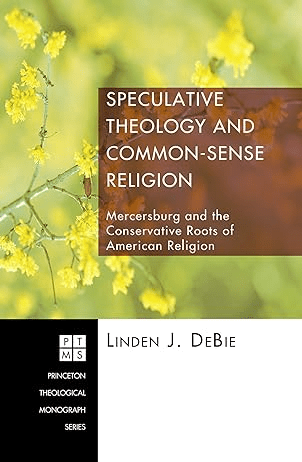
Evangelicals in nineteenth-century America had a headquarters at Princeton. Charles Hodge never expected that a former student of Princeton and his own replacement during his hiatus in Europe, John W. Nevin, would lead the German Reformed Church’s seminary in a new, and in his mind, destructive direction. The two, along with their institutions, would clash over philosophy and religion, producing some of the best historical theology ever written in the United States. The clash was broad, influencing everything from hermeneutics to liturgy, but at its core was the philosophical antagonism of Princeton’s Scottish common-sense perspective and the German speculative method employed by Mercersburg. Both Princeton and Mercersburg were the cautious and critical beneficiaries of a century of European Protestant science, philosophy, and theology, and they were intent on adapting that legacy to the American religious context. For Princeton, much of the new European thought was suspect. In contrast, Mercersburg embraced a great deal of what the Continent offered. Princeton followed a conservative path, never straying far from the foundation established by Locke. They enshrined an evangelical perspective that would become a bedrock for conservative Protestants to this day. In contrast, Nevin and the Mercersburg school were swayed by the advances in theological science made by Germany’s mediating school of theology. They embraced a churchy idealism called “evangelical catholicism” and emphatically warned that the direction of Princeton and with it Protestant American religion and politics, would grow increasingly subjective, thus divided and absorbed with individual salvation. They cautioned against the spirit of the growing evangelical bias toward personal religion as it led to sectarian disunity and they warned evangelicals not to confuse numerical success with spiritual success. In contrast, Princeton was alarmed at the direction of European philosophy and theology and they resisted Mercersburg with what today continues to be the fundamental teachings of evangelical theology. Princeton’s appeal was in its common-sense philosophical moorings, which drew rapidly industrializing America into its arms. Mercersburg countered with a philosophically defended, churchly idealism based on a speculative philosophy that effectively critiqued what many to this day find divisive and dangerous about America’s current Religious Right.
-
Rip’s Knickerbockers
Historical Novel
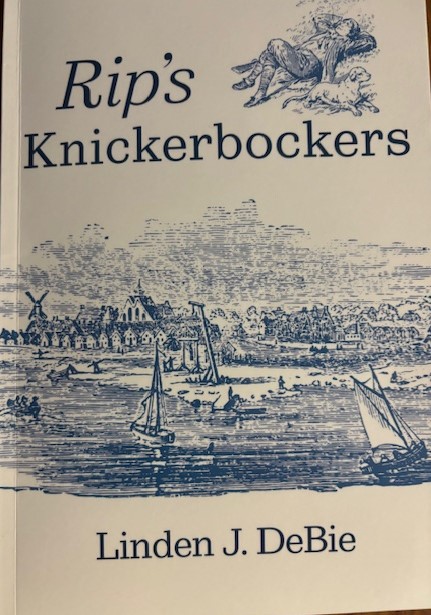
Inspired by Washington Irving’s legendary tale Rip Van Winkle, Rip’s Knickerbockers takes a spin in a new and unexpected direction. It’s the same old Rip Van Winkle, but this time his long nap finds him in an entirely unfamiliar world. The novel contains wonderful references to pre-colonial and post-colonial America. But it is the unexpected that must be expected in this light, humorous, and entertaining novel.
The Mystical Presence
An Edited Work
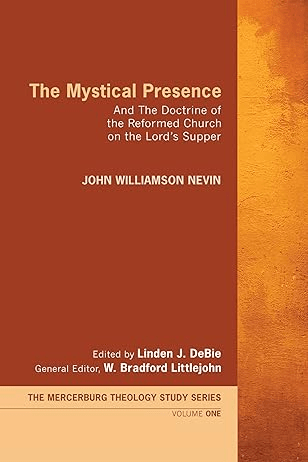
The Mystical Presence (1846), John Williamson Nevin’s magnum opus, was an attempt to combat the sectarianism and subjectivism of nineteenth-century American religion by recovering the robust sacramental and incarnational theology of the Protestant Reformation, enriched with the categories of German idealism. In it, he makes the historical case for the spiritual real presence as the authentic Reformed doctrine of the Eucharist, and explains the theological and philosophical context that render the doctrine intelligible. The 1850 article “The Doctrine of the Reformed Church on the Lord’s Supper” represents his response to his arch critic, Charles Hodge of Princeton Seminary, providing what is still considered a definitive historical treatment of Reformed eucharistic theology. Both texts demonstrate Nevin’s immense erudition and theological creativity, contributing to our understanding not only of Reformed theology, but also of the unique milieu of nineteenth-century American religion.
John Williamson Nevin: Evangelical Catholic
Biography
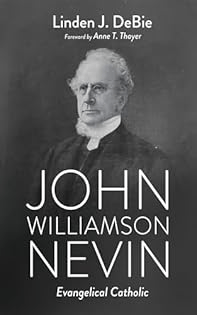
John Williamson Nevin’s life has never been given the full attention that it deserves. That may be due in part to the controversial nature of his thinking. Yet in many respects, his enormous contribution to American religious history is acknowledged by those who have read him. He stood out as the great advocate of evangelical catholicism, and his call for a thorough examination of the place of the church in nineteenth-century theology was revolutionary. It was Nevin who first saw the threat to the church in the erosion of faith in the church as a divine institution sacramentally entrusted by God with the reclamation of the whole world–an erosion that occurred well before the Civil War in the hypersubjectivity of Protestant America.
Coena Mystica: Debating Reformed Eucharistic Theology
An edited work
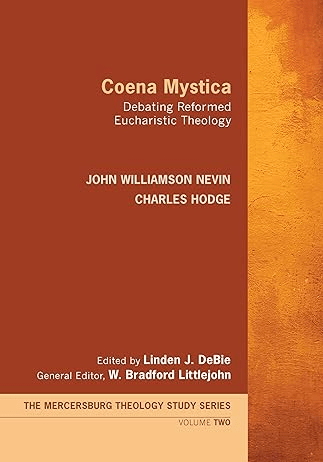
”Coena Mystica” contains the never-before-reprinted text of John Williamson Nevin’s response to Charles Hodge’s devastating critiques of his 1846 magnum opus, ”The Mystical Presence.” Initially appearing in twelve issues of the little-known Weekly Messenger of the German Reformed Church and almost entirely neglected by historians since, Nevin’s response included the full text of Hodge’s article, with his rejoinders interspersed every few pages. These articles, in addition to providing a lively and illuminating debate on the roots of Reformed eucharistic theology, take the disputants into such fields as the nature of the church, the development of doctrine, the person and work of Christ, and the merits of German idealism. The quality of the historical argument and theological acumen here displayed makes this exchange one of the landmark theological controversies of the nineteenth century, a gift to historians of the period, students of Reformed theology, and anyone seeking to better understand the contentious legacy of the Protestant Reformation.
The present critical edition carefully preserves the original text, while providing extensive introductions, annotations, and bibliography to orient the modern reader and facilitate further scholarship.
FOR MORE ON MERCERSBURG THEOLOGY GO TO THE WEBSITE MERCERSBURG TODAY.NET
https://mercersburgtoday.net
Find us at (just click the links)
amazon.com/author/debiebooks.com
Or contact Linden at
mailto: lindendebie@debiebooks.com
FIND HIS AUTHOR’S PAGE ON FACEBOOK LINDEN DEBIE
Designed with WordPress
 DeBieBooks